Sunday, November 18, 2018

Kawagoe The Little Edo Town in the Modern day Japan

Kawagoe! Never did I imagined that I’ll be seeing this remarkable place for real. I would like to take credit to my Maruguto A2 book for letting me know this town exist, and I really made sure that this place is part on my itinerary. It has always been my dream to experience the old Japan atmosphere and Kawagoe is the perfect place to visit if you are visiting Tokyo. Located about 50 minutes by train from downtown Tokyo. Kawagoe is a City in Saitama Prefecture, Japan.
Known as the Little Edo town in the modern day Japan. The remnant of the Edo period still exist in here. Kawagoe has preserved old warehouses, temples and ruins of castles. And it’s amazing how some infrastructures are still being use, as coffee shops or museums. 
If you are coming from Ueno, take the Yamanote Line train going to Ikebukuro Station (ride 8 stops, 20 minutes ) and take the local train (Tobu-tojo Line) bound for Kawagoe, ride 12 stops and 30 minutes later you’ll arrived on your destination. 
Once you arrived in Kawagoe, make sure to check there tourism office, right in-font of the exit area of the station. There are maps and guides you can get from the office. The local tourism office also offers bus tours that provides access to all the main attractions of the city. If you take this tours, I suggest you take the Kawagoe Co-Edo Loop Bus. It’s a retro-style bus that looks like our Jeepney version, but this ride is way cooler that our Jeepney’s. Riding the Co-Edo Loop Bus will give you the nostalgia effect as it look like one of Edo period mode of transportation. Single trips cost 200 yen, while a day of unlimited travel costs 500 yen. The buses operate every 20-30 minutes. The other tour bus is the Tobu Koedo Loop Bus (normal bus) a one-day pass costs 300 yen. These buses make their round trips every 50 minutes on weekdays and every 15 to 30 minutes on weekends and national holidays. (Prices may change without prior notice). 
But if you feel like walking like what I did, then go for it. But make sure you have local friends or guide so when you get lost its easy to find your correct destination. What I notice, while walking around this City is that it’s so quiet and I seldom see people on the streets especially around Kita-in Temple and Hikawa Shrine. And even if I had internet connection with me, I still had hard time navigating it, so I was really thankful Tosh was with me during this trip.
Our first stop is the famous Kurazukuri Zone or the Kura No Machi (Old Town) Inchibangai Street and Toki No Kane (Time Bell Tower) these two landmark are beside each other. 
Kura No Machi is Japanese homes once had a strong building called “Kura” for on-property storage of household’s tools. Since these buildings were very fire-resistant, they developed into residential buildings and stores in Kawagoe. This zone is a culturally significant are where the atmosphere of a town 100 years ago can be experienced. Super amazed strolling on this street, feels like we’ve traveled back in time to ancient Edo. 
Toki No Kane is the symbol of Kawagoe. Because there were no clocks in the Edo period, this tower where a bell had been rung to announce the time to the people. Up to this day, the bell is still being rung four times daily from 6:00am, 12:00nn, 3:00pm and 6:00pm and its sound has been selected as one of the “100 Soundscapes of Japan: Preserving Our Heritage” by the Ministry of Environment. 
The current Toki No Kane is the fourth version after the tower was re-built immediately after the Great Fire of Kawagoe (1893). Its towering presence over the Kurazukuri (storehouse) zone has become the symbol of Little Edo, Kawagoe. 
Next stop is shrine, temple and castle hopping, there are plenty of these in Kawagoe but we only visit 3 significance sites as my friend needs to be in Tokyo before 5pm because he has work at night. 
Kawagoe Castle Honmaru Residence - Once upon a time, a castle once stood in Kawagoe but because of the air raid bombing during WWW II the castle was ruined and the only remaining piece of history for visitors to witness in Kawagoe Castle is the Honmaru Goten (Residence). It used to serve as the lords residence and office. The building is now a museum that features a garden and several historical artifacts. 
Kawagoe Hikawa Shrine - This is probably the most popular shrine in Kawagoe, known as a shrine of relationships and matchmaking. I have no idea this kind of beliefs exist, no wonder why my Japanese friend was kinda feeling awkward when we get to this shine. Ha!ha!ha! Gomenasai! So if you’re a couple visiting Kawagoe or someone who wish to have a child or someone who is praying for their soul-mates and the one, then this shrine should be on your top must visit in Kawagoe. 
Last but not the least on our Kawagoe trip is the Kita-in Temple. Kita-in Temple, or Kawagoe Daishi, is a Tendai School temple with a long history. It was established in 830 by Jikaku Daishi, En'nin (a priest) upon the order of the Emperor. The temple was destroyed by the 1638 Great Fire of Kawagoe but was reconstructed by the third shogun, Iemitsu Tokugawa. 
There are many artefact’s designated as Important Cultural Properties of Japan and Tangible Cultural Properties of the Prefecture on the temple grounds such as the Kakuden hall, where Iemitsu was born, and the Jikeido main hall. The gohyaku-rakan (500 status of rakan) is also one of the temple highlights. You can enjoy looking at over 500 statues of rakan and look at their facial expressions. The temple offers an experience in a Buddhist training. 
The practice of reading sutra is given every month. The benefits of the temple are for general concerns, everyday safety, good business, family well-being, safe journey, and protection from evil, and many people visit the temple throughout the year, particularly for hatsu-daishi New Year ceremony in January, the setsubun spring gathering, and the daruma doll festival as per Live Japan Guide. 
Indeed Kawagoe is worth the visit. It gives you a glimpse of Edo-era which you can’t see in Tokyo. A town of history retaining the culture and presence of old Japan. As it is not far from Tokyo, it is an ideal town for a day out.
BONUS:
While in Kawagoe particularly in Toki No Kane streets , few steps away you will see the coolest Starbucks establishments I have seen so far. They have a garden also inside wherein you can enjoy your coffee and relax. So keep this in mind Minasan.

Friday, November 16, 2018

Sensoji Temple in Asakusa at Night

Sensoji Temple in Asakusa is Tokyo's oldest Buddhist Temple, and one of it's most significant. It is one of the best sightseeing spots in Tokyo where most of first time travelers to Tokyo visit. Unfortunately not on my case, this isn't on my itinerary because I was here last year September 10 to 25, 2017.
But itinerary changed when I was checking on places to visit close to my hostel at night, Sensoji pops-up, 20 mins walk from my hostel. I was still contemplating if I should go or not because the thought that I was here before is stopping me. Until hostel staff told me that this place offers different view at night, so the lazy me went and voilaaaa! I was blown away by its beauty.
Sensoji Temple is stunningly beautiful at night with the lights on, the temples are glowing.๐Ÿ˜ I know these photos cannot make justice on how incredibly pretty Sensoji at night. But you guy's have to check this out either it's your first time or not. 
I swear you won't get disappointed. Less people at night because most shops in Nakamise-dori were already closed. Nakamise-dori is one of Tokyo's district, a shopping street providing tourist visiting Sensoji Temple a variety of local delicacies, modern and traditional stuff and souvenirs proudly made in Japan. The temple is approached via Nakamise dori so expect the crowd when your visiting this temple in a broad day light.
I would not mind coming back in here on my next Tokyo trip, because really its beautiful at night and Sensoji offers a relaxing feeling for me while sitting in a bench under a tree while having my quite moment.
Here are some of my pics visiting Sensoji in the morning. And let me know which is best, coming here at night or when the sun is out. Domo Arigatou Minasan.
One interesting to see around Asakusa particulary at the entrance of Sensoji temple are these men carrying the Rickshaw (literally means jinrikisha a "man powered vehicle"). Asakusa can be explored by foot, but if you want to experiece this ancient mode of transportaion in Japan then feel free to do it here. A 30 minute tour for two persons costs around 9000 yen. Price may change without prior notice.

Even at night the Tokyo Sky Stree is still visible at Sensoji Temple both are pretty for me.

Relaxing area with cool mist for exhausted visitors like moi.

The Pagoda

Randomly pointing old tree inside the vicinity of Sensoji

HOW TO GET HERE:
Access: Asakusa Station (Tokyo Metro), 5 minutes on foot
Asakusa Station (Tobu Railway), 5 minutes on foot
Asakusa Station (Toei Subway), 5 minutes on foot
Asakusa Station (Tsukuba Express), 5 minutes on foot

ADMISSION IS FEE 

Operating Hours: 24 hours Open Daily


Other related blog post: 
Before you go: please share this blog on Facebook, RT on Twitter. Follow me on Facebook, at The Travelling Hopia. Subscribe to receive email updates. Thank you for your support!

The Kanda Used Book Festival in Jimbocho


As soon as I settled in my hostel. I had to go straight to check out The Kanda Used Book Festival in the Jimbocho district of Kanda—renowned town of used and antique books. So happy to be here, saw this street on the pages of my Maruguto A2 book.


Lucky to be here just in time for the Book festival, wherein bookshelves are placed on the sidewalks of the area’s main street (Yasukuni Dori), creating a long corridor of books that faces the local bookstores.


Mangga fans friends would surely love this place. Finally got my set of Karuta cards here at yung playing cards nila in Japanese with very kawaii drawings.๐Ÿ˜❤ 


If you are a book geek you must include a visit on this district while visiting Japan. You will surely love this place

Instagrammable spot in Shibuya Tokyo

If there is one thing I was quite disappointed about our trip last year, was definitely coming here. Well, technically I was in the area but I never known about this spot. When I saw my friends insta feed I was like, whaaaaat???! 

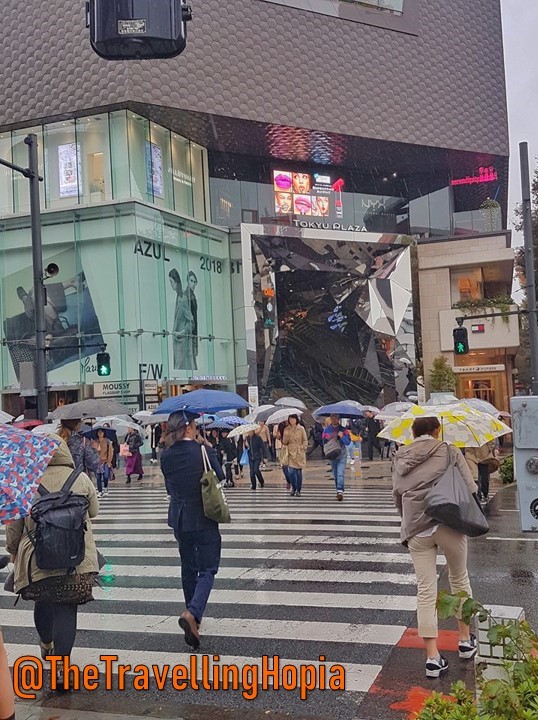
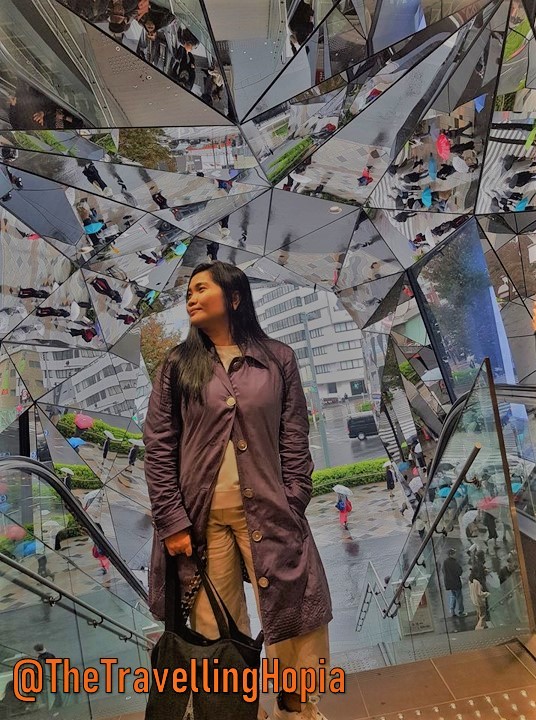
Well, technically I was in the area but I never known about this spot. When I saw my friends insta feed I was like, whaaaaat???! The Tokyu Plaza Omotesando Harajuku is located in the center of the Harajuku Shibuya area. Tokyu Plaza Omotesando Harajuku is actually a shopping complex that has an interesting entrances I have never seen before. The escalator ride going up and down has a mind blowing kaleidoscope of mirrors that will make you stop for a moment and just stare! 

Designed by award-winning architect Hiroshi Nakamura, the shopping complex’s multifaceted entrance way really gives snappers a beautiful backdrop for a photo-op out of its unique puzzle mirrors of reflections.

Heads up to future travelers whose going to visit this place! There are times that you might have to queue for your turn here so better to come early. I was lucky to be here with less people around the grounds because it was raining that day.


Other related blog post: 
Before you go: please share this blog on Facebook, RT on Twitter. Follow me on Facebook, at The Travelling Hopia. Subscribe to receive email updates. Thank you for your support!


Thursday, November 15, 2018

Keisei Skyliner

Hello Japan, tadaima! (I'm back!) 

I was so happy to be back on this beautiful country. The for the second time around, I took the Keisei Skyliner on my way to Tokyo from the airport. This is a top of the range high-speed train that operates between Narita Airport and Ueno (downtown Tokyo) offering a comfortable and efficient ride. 


This is my first time taking this mode of transportation in Japan. The last time I was here last year with my friends, we took the Limousine Bus going to Tokyo. Limo Bus is a bit expensive, so if you have plenty of cash with you, then go for it. ๐Ÿ˜Š

(Pickup counter for Keisei Skyliner ticket booked via Klook at the Narita Terminal 2 Station)

After getting my luggage I went to find the counter of Keisei Skyliner ticket and this is what the confusing part is. The voucher ticket I had with says, Narita International Airport Terminal 2: International Arrival Lobby Central Building HIS Counter (1/F). And when I asked around the ground staff at the airport lead me to the actual ticketing office of Skyliner. When I got there the staff told me that the address I had with in my hands were different from theirs. I need to get the coupon at the address written on my booking e voucher, then after that I need to go back to the Skyliner ticketing office to get the actual ticket for my train ride. Confusing right?! Especially for first-time/first solo travel.

(Klook ticket voucher)

I'm so glad I can speak a little bit of Nihonggo so it wasn't that hard for me after all. After a minute, found the counter, took a photo of it, so you won't get confused like myself Minasan. After getting my coupon, I proceeded to the ground floor to get my actual Skyliner ticket at their ticketing office.


( Routing map of Skyliner )

I decided to take this because is it fast and a bit cheaper from the rest of transportation available going to downtown Tokyo and my hotel accommodation is one station away from Ueno. So, I don’t need to travel far. I just have to get off at Ueno and walk a few minutes away to take the Hibiya Line going to Iriya Station where my hostel is located.

(There are a lot of sign and entrance going to the subway station at the Narita Terminal 2. If you are taking the Skyliner this is the entrance you need to go in, so make sure to keep this photo and sign in mind.)

If you wish to take this ride on your visit to Japan, make sure you booked a head online through Klook , it’s cheaper online. Skyliner not only offer travel in comfort and style with dedicated luggage space for your bags. It also offers unlimited wifi-access while you’re on board, just make sure to ask for the password at the Keisei counter.

Tuesday, July 10, 2018

Chihayafuru: Kami No Ku Premiere in the Philippines

The Japan Foundation of Manila together with the Japan Embassy in the Philippines held their annual EIGASAI (Japanese Film) in the Philippines. This year marks their 21st Eigasai in the country from Jul. 4 to Aug. 26, everyone can enjoy because it’s FREE. Screenings nationwide, Manila, Cebu, Bacolod, Naga, and Davao. 

This year’s edition offers diverse genres of Japanese films and I am personally excited to watch Chihayafuru, an anime adaptation of the manga with the same title, written and illustrated by Yuki Suetsugu and serialized in the magazine Be Love. This manga won the second Manga Taishou award, and the 35th Kodansha Manga Award in the shoujo category. Chihayafuru become so known that it boosted interest in competitive “Karuta”, a Japanese card game. The manga has sold over 4.5 million copies and has been praised for combining the elements of sports and literature. Because of its popularity in manga world a live-action film adaptation titled Chihayafuru: Kami no Ku was released on March 19, 2016, second film released on April 29, 2016. The third  installment of this film has been released on March 17th, 2018. 

Not only the Chihayafuru: Kami No Ku film I was personally excited about, but also the fact the writer and director behind this famous film was also present at the first opening of Eigasai in Manila. I was extremely thrilled for the opportunity to meet the man of the hour and also having the chance to take a selfie with Japan's famous and award-winning Director Norihiro Koizumi. He also signed my Egasai pamphlet. Whatta! Happy day for me! 

Just in case  you wonder here is Chihayafuru: Kami No Ku Plot: 

Chihaya Ayase is a girl who has spent most of her life simply supporting her sister in her model career. That changes when she meets a boy named Arata Wataya a talented karuta player who recognizes Chihaya's potential to become a great player. As Chihaya takes on a new dream of becoming Japan's best karuta player, she is soon separated from her karuta playing friends as they grow up. Now in high school, Chihaya still continues to play karuta in the hope that she will one day meet her friends again.